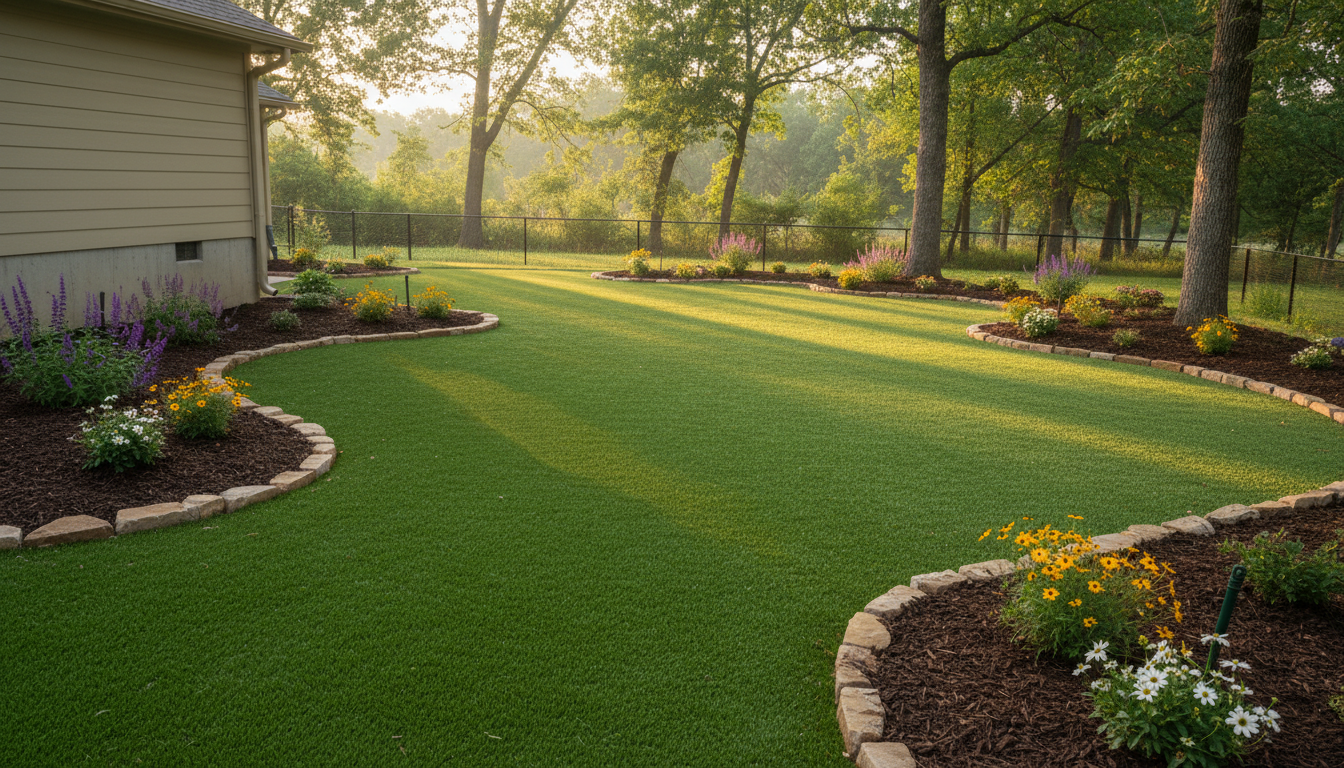
Maintaining a green lawn through summer lawn care Utah requires watering deeply and infrequently during the early morning to ensure moisture reaches the root zone. Homeowners should also set mower blades to 3.5 or 4 inches to shade the soil, which prevents heat stress and keeps the ground cool. These practices help grass survive intense heat while promoting a healthy, resilient root system.
As the July sun beats down on Carbon County, many homeowners watch helplessly as their lush spring turf fades into a brittle, golden brown. Maintaining a healthy lawn in our high desert climate is a relentless challenge that requires more than just a standard sprinkler schedule. The intense heat and low humidity of Utah summers demand a sophisticated approach to irrigation and maintenance to prevent permanent damage. At Keith Landscaping, we understand the specific environmental stressors that Carbon County properties face during these peak months. In this guide, we will examine the professional strategies needed to keep your grass resilient. You will learn the secrets of deep watering cycles, the importance of adjusted mowing heights, and how to properly fertilize without risking chemical burns. With the right techniques, your landscape can remain a vibrant oasis despite the harshest summer conditions.
The Challenge of Summer Lawn Care in Utah: Carbon County High Desert Realities
Living in Price, Helper, or Wellington presents a unique set of challenges for anyone maintaining a lawn. Our region is defined by a high desert climate where low humidity and intense UV exposure work against the survival of traditional turf. In this environment, the air effectively pulls moisture out of the soil and plant tissue at an accelerated rate, making summer lawn care in Utah a difficult balancing act.
Most residential and commercial properties in Carbon County feature Kentucky Bluegrass. As a cool-season grass, it thrives in moderate temperatures but struggles significantly when our summer heat arrives. By July, many homeowners witness their yards turning brown and brittle as the grass attempts to enter a dormant state to survive the heat. This is a common pain point because our natural environment is designed to support sagebrush and juniper, not the high-moisture requirements of a lush green carpet.
Overcoming these high desert realities requires a strategy that respects our local conditions. Without a specific plan for irrigation and soil protection, even the most well-intended watering can fail to keep a lawn healthy. At Keith Landscaping, we provide dependable residential and commercial landscaping services designed to navigate these local climate hurdles, ensuring your outdoor space remains functional and vibrant despite the intense summer sun.
The Golden Rule of Watering: Deep and Infrequent Cycles
The most common reaction to the scorching Carbon County sun is to set sprinkler timers for ten minutes every single morning. While this seems logical, it is the most damaging mistake you can make for summer lawn care in Utah. Grass roots are biologically opportunistic; they only grow as deep as the moisture level in the soil. Frequent, shallow watering keeps the top layer of soil damp but leaves the subsoil bone dry. This trains the root system to stay near the surface, where the ground temperature is highest. When the afternoon heat peaks in Price or Helper, these shallow roots effectively fry in the dirt.
To build a resilient lawn, you must shift to a deep and infrequent watering cycle. While many general guides suggest 1 to 2 inches of water per week, the intense UV exposure and low humidity in Carbon County often require up to 2.5 inches during July and August. Instead of daily cycles, schedule your irrigation for 2 to 3 times per week, running the zones long enough to saturate the soil several inches deep. This encourages roots to dive downward, seeking the cooler, more stable moisture levels deep in the earth.
You can accurately measure your system's output using the tuna can test. Place several empty tuna cans around your lawn and run a standard cycle. Once finished, measure the depth of water in the cans with a ruler. If your 20 minute cycle only produces a quarter inch of water, you know you need to extend that run time significantly to hit your weekly targets.
This method is the most effective way to keep a lawn green without wasting water. By banking moisture deep in the soil profile, you reduce the amount of water lost to surface evaporation. Deeply rooted grass can survive longer intervals between watering, making your landscape more self-sufficient. For those who find managing these adjustments difficult, routine maintenance and seasonal clean-ups can ensure your irrigation system is calibrated correctly for the changing demands of the high desert season.
Optimal Timing: Why Early Morning Wins Every Time
Even if you have mastered the volume of water required, the time of day you activate your sprinklers determines how much of that moisture actually reaches the root zone. For effective summer lawn care in Utah, the optimal window for irrigation is between 5:00 AM and 10:00 AM. This timing is not arbitrary; it accounts for the specific atmospheric conditions of the high desert.
During the early morning hours, winds in Carbon County are typically at their lowest, ensuring that the spray patterns remain consistent and hit their intended targets rather than drifting onto the pavement. Furthermore, the air is cooler and the sun is less intense, which minimizes immediate evaporation. Watering at noon is the most wasteful practice possible; in our arid climate, up to 50 percent of the water can evaporate before it even soaks into the soil.
Conversely, watering late in the evening creates a different set of problems. When grass blades remain wet overnight, it creates a breeding ground for fungal pathogens like Summer Patch. By watering in the early morning, you allow the grass to absorb what it needs while the rising sun dries the blades quickly. If you are unsure if your irrigation controller is optimized for these windows, our team provides dependable residential and commercial landscaping services to help you program and maintain a system that works with the local climate rather than against it.
Mowing Strategy: Set the Blades to High for Soil Shade

While irrigation timing is vital, your mowing height directly impacts how long the soil retains that moisture. For effective summer lawn care in Utah, the most impactful adjustment you can make is raising your mower blades. We recommend maintaining a grass height of 3.5 to 4 inches throughout the peak heat months in Carbon County.
Taller grass blades act as a natural canopy, providing shade to the soil surface. This shading effect significantly reduces ground temperature, which prevents the subsoil moisture from evaporating before the roots can absorb it. A cooler root zone is a less stressed root zone. By keeping the soil shaded, you ensure the plant can continue to function without entering a heat-induced dormant state.
Adhering to the one third rule is equally important for plant health. You should never remove more than one third of the grass blade in a single mowing session. Cutting too much at once shocks the plant, forcing it to divert all its energy to repairing the damaged leaf rather than maintaining its root system. During a 90 degree week in Price or Helper, this shock can be the difference between a resilient lawn and one that turns brown overnight.
The quality of the cut also matters. Dull residential mower blades often tear or fray the grass rather than slicing it cleanly. These ragged edges lose moisture rapidly and turn a distinct white or tan color, giving the entire yard a scorched appearance. At Keith Landscaping, we provide dependable residential and commercial landscaping services using professional equipment with precision-sharpened blades. This ensures every cut is clean, preserving the internal moisture of the grass and maintaining a vibrant, green aesthetic even in the harshest high desert conditions.
Identifying Heat Stress vs. Drought and Disease
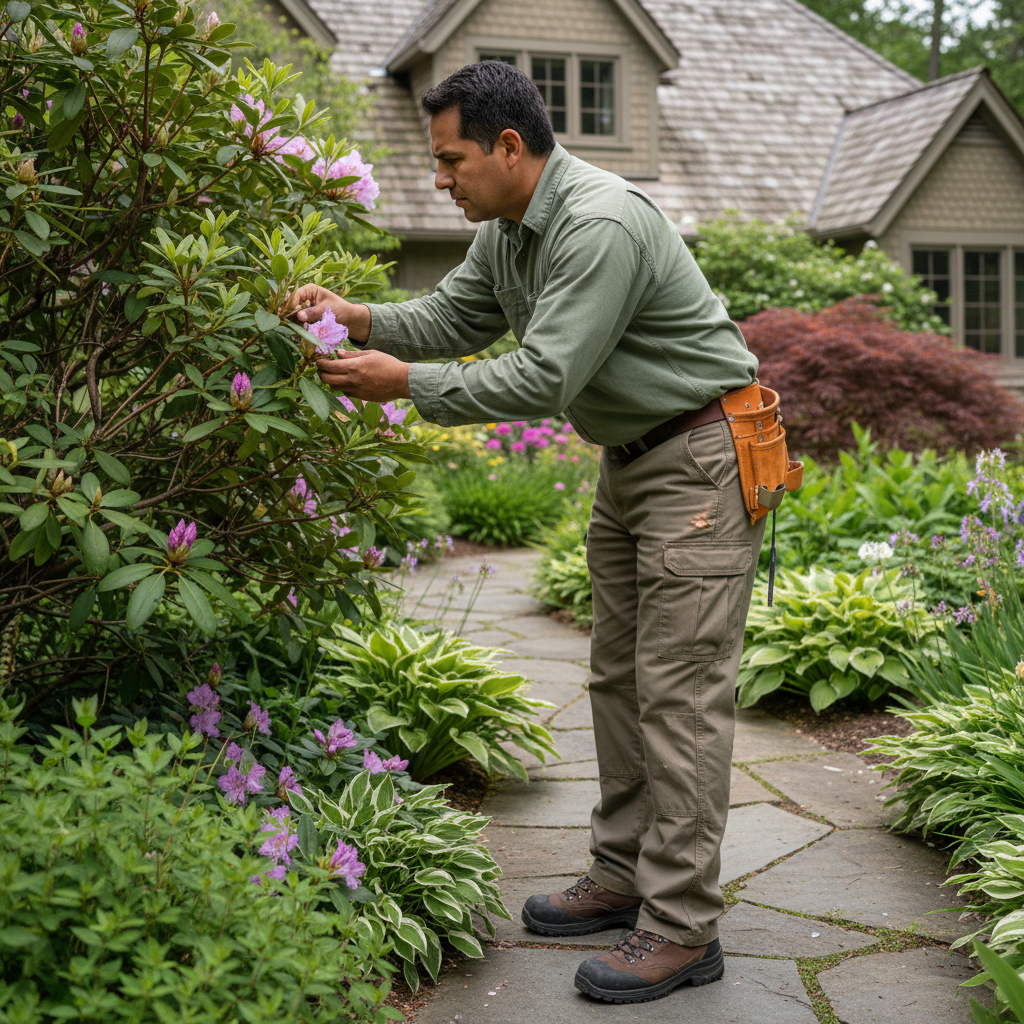
Even with precise mowing heights, you must monitor how the turf responds to fluctuating temperatures. Identifying the difference between a thirsty lawn and one suffering from disease is essential for successful summer lawn care Utah. You can determine if your grass is experiencing heat stress by performing a footprint test. Walk across a section of the yard; if the blades remain flattened and do not spring back immediately, the plant is losing internal pressure and requires a deep watering cycle.
It is important to distinguish this stress from fungal issues like Summer Patch, which often appears in Carbon County when temperatures stay consistently high. Summer Patch creates circular, straw colored rings that many homeowners mistake for dry spots. If you respond by increasing water, you may inadvertently worsen the problem, as excess moisture in warm soil encourages fungal growth. While dormant grass turns a uniform tan to protect its crown, a diseased or dying lawn will often show signs of rot or brittle, blackened roots.
Correctly diagnosing these issues ensures you do not waste water on a problem that requires a different treatment. If you are unsure of what your grass needs, professional routine maintenance and seasonal clean-ups can provide the clarity needed to keep your property healthy. Our team at Keith Landscaping helps residential and commercial clients recognize these subtle cues to prevent minor heat stress from becoming a total lawn loss.
Summer Fertilization: Don't Burn Your Lawn in the Heat
Applying the wrong nutrients during a heatwave is one of the quickest ways to damage a lawn. When temperatures in Carbon County consistently reach the 90 to 100 degree range, your grass naturally enters a defensive state. Using high nitrogen fertilizers during these peaks is a mistake; it forces the plant to produce new top growth, which drains vital energy away from the roots and can lead to chemical burning.
The best summer fertilizer for summer lawn care Utah is a slow release organic product or a targeted iron supplement. Iron provides a deep, dark green color by aiding chlorophyll production without stimulating the rapid, water hungry growth that nitrogen induces. Because local soil in Price and Wellington is often alkaline, standard off the shelf fertilizers may not be effectively absorbed by the grass.
Keith Landscaping provides tailored fertilization plans that account for these specific soil compositions. We use professional grade products as part of our dependable residential and commercial landscaping services to ensure nutrients are delivered safely. Integrating these applications into routine maintenance and seasonal clean-ups prevents the common mistakes that lead to brown, brittle landscapes during the height of August.
Professional Support for Carbon County Properties

Achieving consistent results with summer lawn care Utah often requires a technical eye that goes beyond basic mowing. Professional maintenance improves water efficiency by identifying specific irrigation failures that homeowners might miss. A tilted sprinkler head, a clogged nozzle, or a lack of head to head coverage creates dry zones that often tempt owners to increase the entire system's run time, leading to significant waste. A professional technician ensures uniform coverage, directing water exactly where it is needed without saturating heat absorbing sidewalks or driveways.
We provide dependable residential and commercial landscaping services throughout Carbon County to address these technical needs. Beyond irrigation, routine maintenance and seasonal clean-ups play a vital role in lawn resilience. Sharp edges along walkways prevent heat transfer from the pavement to the grass roots, while regular debris removal prevents the development of localized hot spots that trap heat against the soil. For reliable results in Price, Helper, or Wellington, contact Keith Landscaping to ensure your property remains functional and well maintained throughout the harshest months of the year.